Welcome to the Lab of Dr. John M. Burke
Department of Plant Biology University of Georgia Athens, GA

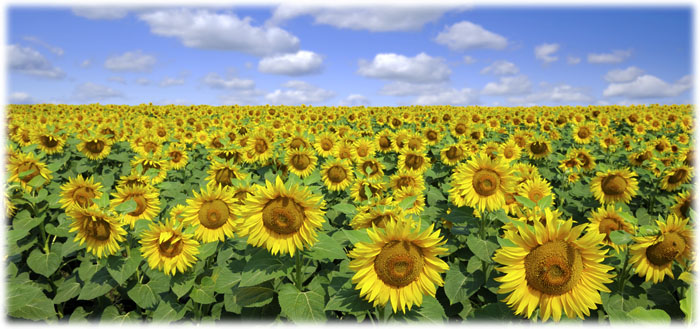
Our main focus is plant evolutionary genetics and genomics. More specifically, we're studying the genetic basis of evolutionary divergence within the sunflower family (i.e., the Compositae or the Asteraceae). We also maintain an interest in the ecological and evolutionary impact of transgene escape from genetically modified crops into their wild relatives. What follows is a brief overview of our work...

Evolution Under Domestication:
The domestication of crop plants typically involves rapid and dramatic phenotypic evolution in response to strong selection. Research in our lab is aimed at understanding the genetic basis of such evolutionary transitions using sunflower (Helianthus annuus) as a model system. We are taking a genetic map-based approach in order to localize regions of the genome that harbor genes controlling domestication-related traits, and are also hunting for genes that bear the population genetic 'signature of selection,' as such genes are especially likely to be of evolutionary and agronomic interest. We are also developing the resources necessary for similar studies in safflower (Carthamus tinctorius).

Reducing the Risks of Transgene Escape:
The commercial introduction of genetically modified crop plants makes possible the evolution of increasingly weedy or invasive wild plants (so-called "superweeds") following transgene escape via hybridization. A number of methods of mitigating the risks associated with transgene escape have been proposed. We are investigating the utility of one such strategy: the placement of transgenes in close proximity to genes at which the cultivar alleles are negatively selected in the wild. Assuming that such genes are sufficiently negatively selected, they should offset the advantages provided by a given transgene, thus slowing (or stopping) its spread.

The Genetics of Speciation:
The genus Stephanomeria contains three especially interesting cases of speciation. The first is the derivation of S. malheurensis from S. exigua. This speciation event seemingly occurred in sympatry, running counter to the classical view of how species form. The second involves the origin of S. diegensis, which is a diploid hybrid species formed following hybridization between S. exigua and S. virgata. We are currently developing the molecular tools necessary to map the genomes of these species as part of our ongoing efforts to: (1) investigate patterns of chromosomal evolution across the genus, and (2) genetically map the reproductive barriers distinguishing these species. Finally, we are investigating the origin and evolution of the allopolyploid S. elata which, like S. diegensis, arose following hybridization between S. exigua and S. virgata.